Key Skills You Gain from a Certified Certificate for Heavy Equipment Program
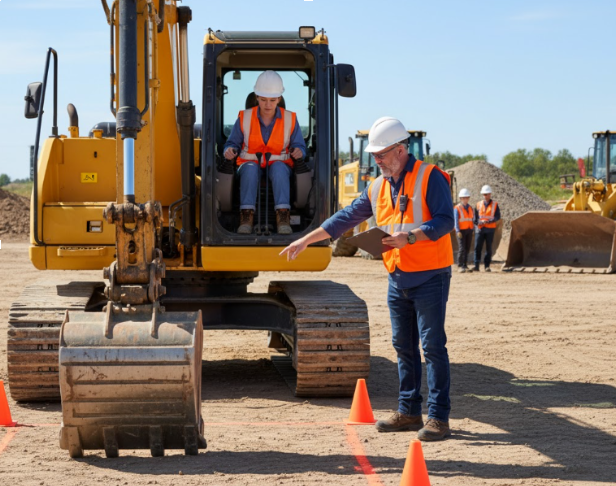
Obtaining a Certificate for heavy equipment is not only a question of going through a professional training program – it is an undertaking aimed at acquiring all the skills necessary for sustainable employment in the fields of construction, logistics, and industrial operations.
The students enrolled in these training courses get to learn both the theory and practical, making them fully prepared to take up actual work in the relevant sites.
Understanding Heavy Machinery Certification
A heavy machinery certification ensures that you have undergone the necessary training and evaluation to allow you to work with different machinery effectively, proficiently, and, more importantly, safely. Certification programs that range from bulldozers and excavators to loaders and backhoes mainly aim at advocating for the warriors of the soil and the appropriate techniques of handling the equipment.
Certification informs prospective employers that you are serious about your career. It lends credibility, in the sense that the nationally accepted recognition of your skills is implied, indicating that you are ready to work in demanding environments where precision and ethical responsibility are of utmost importance.
Hands-On Equipment Operation
The reality of heavy equipment operator training is the ability to handle machinery, which is an integral part of the syllabus. Reading or CCTV-based teaching is mostly about the laws, theories, and operating procedures; it is the practical part that enables trainees to:
- Develop precise control over various machines
- Understand machine capabilities and limitations
- Get confident in operating equipment under realistic job-site conditions
- Learn some of the nuances of moving, digging, and lifting materials efficiently
This experience not only theoretically prepares students but ensures they hit the ground running on day one in their new roles.
Safety and Risk Management
Any heavy equipment operator training is based on the principle of enhancing safety. All certified programs train the students on what to look for and how to manage them proactively. Skills that are critical include:
- Carrying out daily inspections on equipment during maintenance checks
- Understanding safety-related protocols and signage applicable to the site
- Responding according to procedures during emergencies or mechanical failures
- Forcing the safety of co-workers, equipment, and work environment
Operators who consistently prioritize safety are always highly valued by employers because they reduce the chances of accidents in the workplace while increasing productivity.
Technical Knowledge and Troubleshooting
In addition to practical skills, students’ technical competencies are developed through the certificate for heavy equipment courses. The following topics are covered:
- Basic principles of heavy equipment, including hydraulics and engine systems
- On-site techniques to correct minor mechanical problems
- Best practices of fuel and other resource conservation
- Loading, stacking, and hauling heavy equipment correctly
This knowledge and ability make you more flexible, improving your capability to work for numerous companies and perform different constructive roles.
Soft Skills and Professionalism
Attaining a heavy machinery certification through a specialized course is the simplest thing for people keen on studying the operation of equipment. It inculcates several non-technical skills that can come in handy in career development:
- Optimization of performance through maximum utilization and minimization of downtime
- Ability to coordinate and communicate effectively with colleagues
- Working out solutions to challenges within a limited time period
- Observing the code of conduct and ethical standards
Such attributes enable licensed professionals to cope with the changes within high-paced conditions and gradually handle the job promotion.
Career Opportunities After Certification
A qualified operator has the option to explore various prospects in the construction sector, municipal services, mining, and transportation. Companies are looking for educated and certified individuals who are capable of:
- Working with different types of heavy equipment
- Adhering strictly to safety practices
- Performing complex tasks
A Certificate for heavy equipment combined with excellent hard and soft skills can often lead to significant economic benefits, rapid professional growth, and increased marketability as a competent operator.
Contact National Training
Gaining certification via heavy equipment operator training can open up the avenue toward a career that combines skill, security, and possibilities for growth. Programs offered by National Training provide complete instructions with recognized credentials for students alongside hands-on experience toward their success.
An operator who has done heavy machinery certification and earned the certificate will be equipped not only with technical knowledge but also with the confidence and professionalism that employers seek.
Leave a Reply